

After appearing to stall late last year, Windows 11 has recorded a sharp rebound in global adoption, according to the latest data from Statcounter.
The operating system, which slipped to 50.73% market share in December 2025, has now climbed to 72.78% worldwide, marking a substantial gain over the past two months. In contrast, Windows 10 has fallen to 26.27% during the same period.
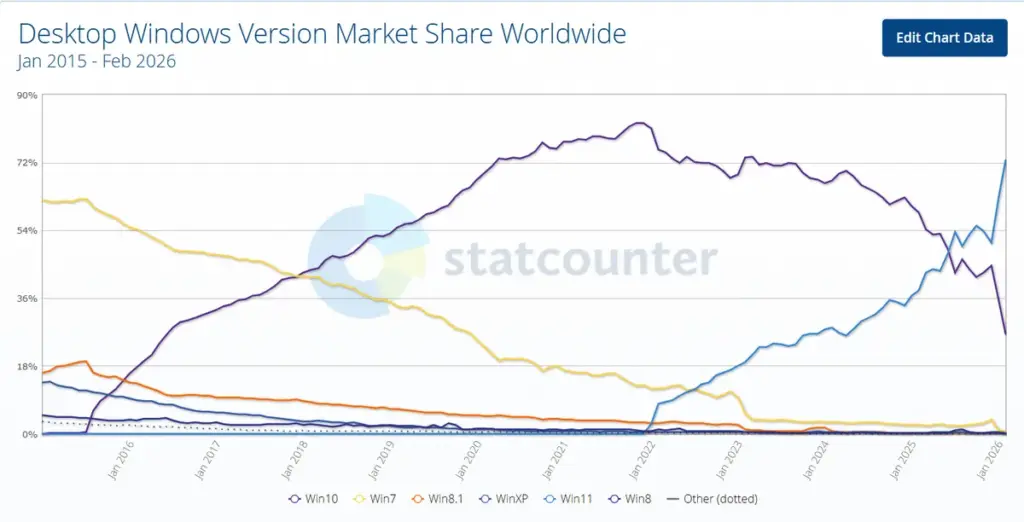
The figures are based on traffic analysis compiled by Statcounter, which tracks usage patterns across billions of page views from roughly 1.5 billion websites each month. While not official Microsoft data, the metrics offer a widely cited snapshot of operating system trends.
Rapid Growth at the Start of 2026
At the beginning of February, Windows 11 had already recorded a 12-point jump, reaching 62.41%. The latest full-month figures show an additional increase of more than 10 percentage points, pushing the operating system well past the 70% mark.
Older versions of Windows continue to fade. Windows 7, which held around 3.8% at the start of 2026, has now dropped below 1%, joining Windows 8, Windows 8.1, and Windows XP in the low-usage category.
Milestone Reached Faster Than Windows 10
During a recent earnings call, Satya Nadella, Microsoft’s CEO, confirmed that Windows 11 had surpassed the 1 billion-user mark. The company achieved that milestone in approximately 1,576 days—faster than the 1,705 days it took Windows 10 to reach the same level.
The acceleration comes despite a wave of criticism surrounding recent updates and feature decisions.
Adoption Continues Amid Criticism
Windows 11 has faced ongoing scrutiny over system stability, forced Microsoft account requirements, expanded telemetry, and the integration of AI features across the operating system.
Several emergency patches have been issued this year to address issues introduced in cumulative updates. At the same time, legacy tools such as Notepad have experienced disruptions tied to cloud-based licensing and service dependencies.
Despite these concerns, the data suggests that upgrades are continuing at a strong pace—likely influenced by the approaching end of support for Windows 10 and ongoing hardware refresh cycles.
Momentum Remains Strong
The latest figures indicate that Windows 11’s growth has not only resumed but accelerated significantly in early 2026. While debate over design choices and system direction continues, adoption trends show that the platform is consolidating its position as the dominant Windows release worldwide.
Whether that momentum sustains through the remainder of the year may depend on how Microsoft balances innovation with stability in upcoming updates.